 Invite In
Eid al-Adha hosting: invitations, replies and the table
Eid al-Adha 2027 is expected on Sunday 16 May, the 10th of Dhu al-Hijjah, or on Monday 17 May where the new moon is sighted a day later. Here is how to invite your guests and keep track of the replies.

-
Pick the day and make the invitation
Eid al-Adha falls on the 10th of Dhu al-Hijjah, at the end of the pilgrimage season. In 2027 it is expected on Sunday 16 May, or on Monday 17 May where the new moon is sighted a day later. The day begins with the Eid prayer, and then comes the family meal.
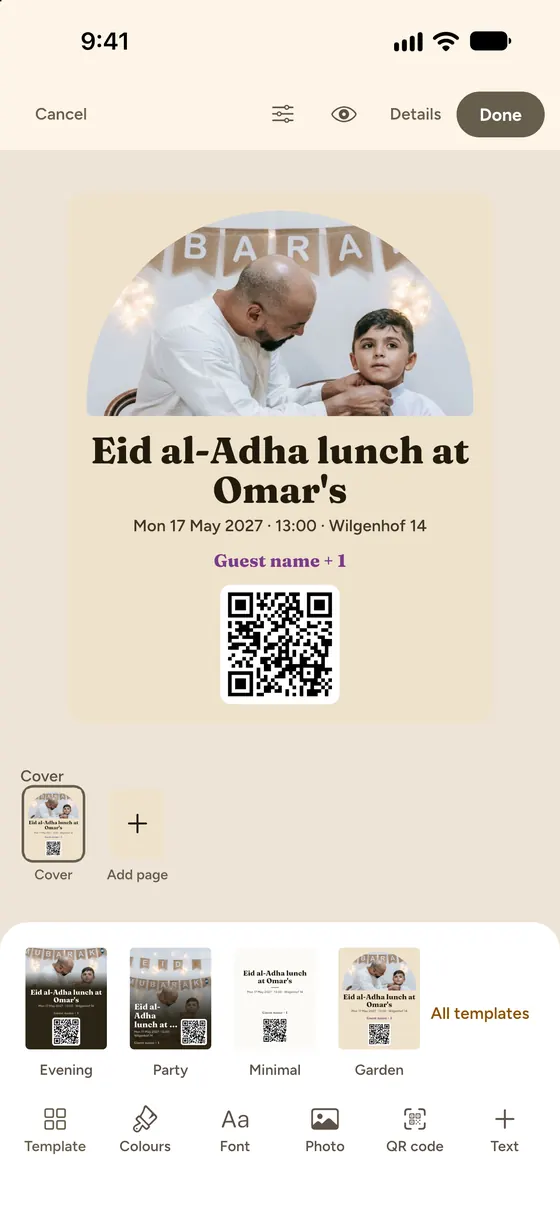
Make an invitation with the date, the time and the address, and add a short line, for example that friends and neighbours are welcome.
-
Send each guest a personal invitation
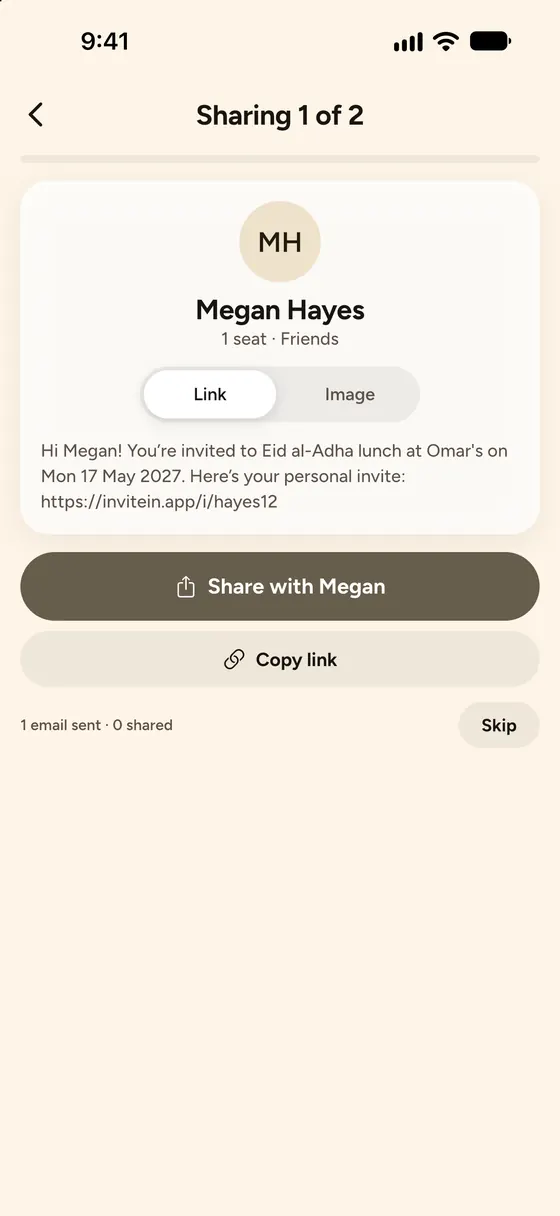
Every guest gets their own link or image, with their own QR code, to share by WhatsApp, email or text message.
Guests answer in their browser, with no app and no account: coming, maybe or not coming. Add a question of your own, such as "Any dietary needs?", so you do not have to ask in the group chat.
-
See who is coming
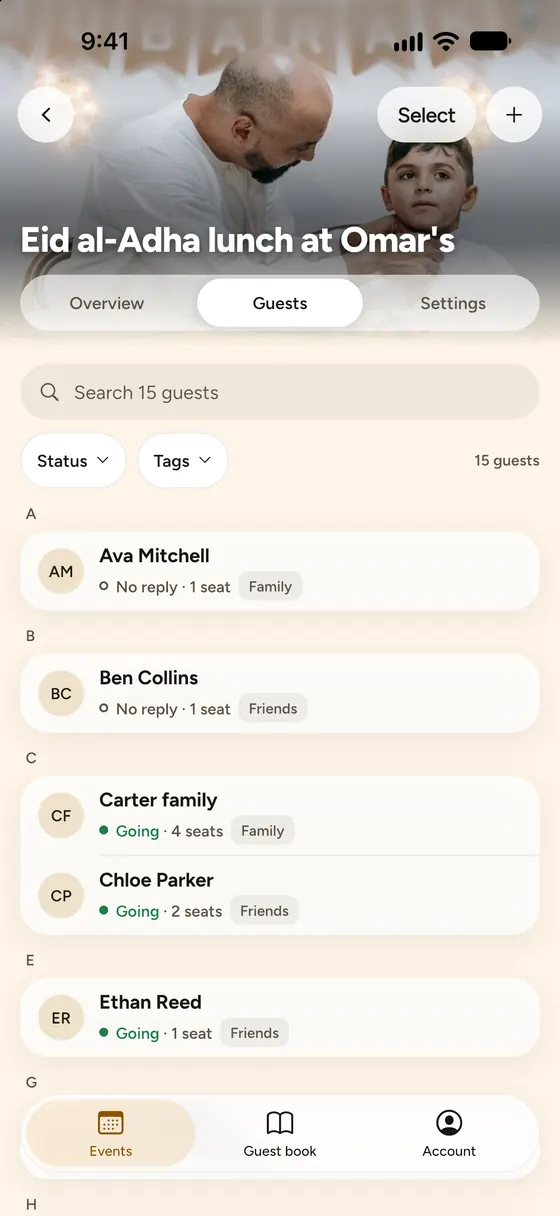
The guest list shows who said yes, who said maybe and who has not replied yet, with the number of seats. You can search it and filter it by status or by a tag such as family or friends.
Check the numbers before you shop and cook, and again the day before. Children count as guests too, so give each family the number of seats it needs.
-
Seat everyone
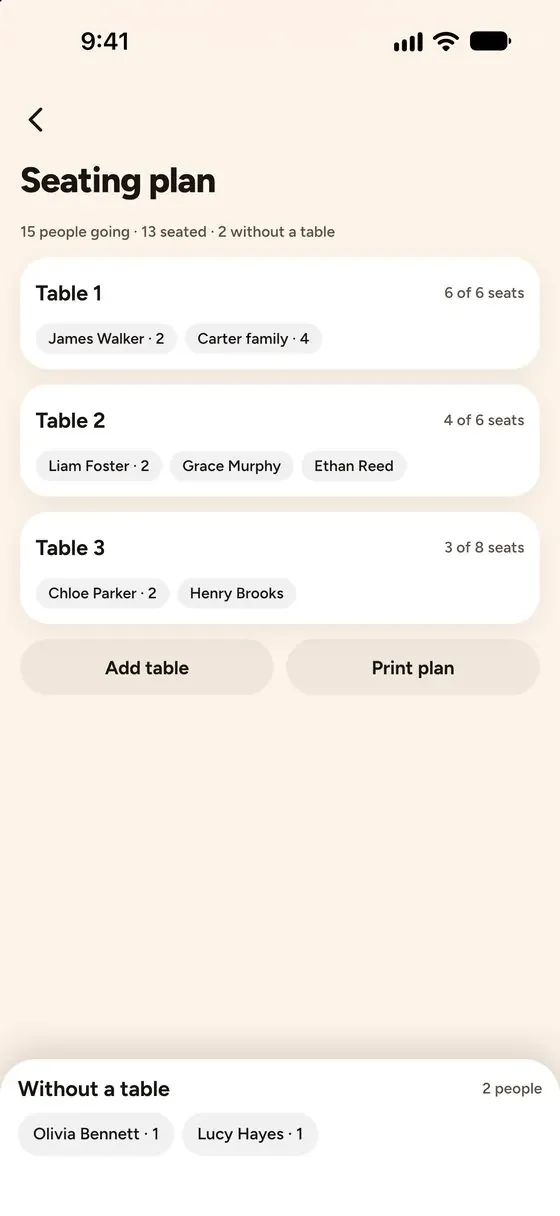
When family, friends and neighbours sit down together, a seating plan helps. Add the tables, set the number of seats on each and put every guest or family at a table. You see at a glance who still has no seat.
You can print the plan and put it by the door.